
Daraz seller charges in Pakistan have become a major concern for many online sellers, especially when fees, taxes, logistics costs, and penalties reduce the final payout. A real seller statement shows how these hidden deductions can affect profit margins and raise questions about whether selling on Daraz is still worth it.
For thousands of entrepreneurs in Pakistan, Daraz is one of the largest online marketplaces for reaching customers. While the platform offers excellent exposure and logistics support, many sellers have started questioning whether Daraz is charging too much from sellers.
The concern isn’t just about commission fees. Sellers are increasingly worried about multiple deductions, shipping costs, taxes, and penalties that can significantly reduce their earnings—even when they have fulfilled their responsibilities.
Let’s examine a real seller statement to understand where the money goes.
A Real Example of Seller Deductions
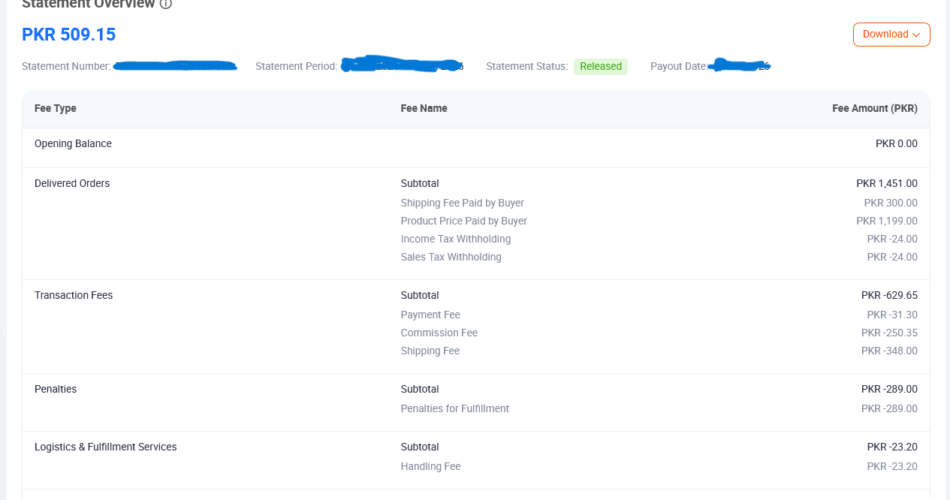
A recent Daraz seller statement showed the following:
Order Value: PKR 1,451
After all deductions, the seller received:
Final Payout: PKR 509.15
The deductions included:
- Transaction Fees: PKR 629.65
- Handling Fee: PKR 23.20
- Fulfillment Penalty: PKR 289.00
At first glance, this seems shocking. However, it’s important to understand what each deduction actually represents before blaming the platform entirely.
Understanding Daraz’s Charges
1. Commission Fee
Daraz seller charges a commission based on the product category. Different categories have different commission rates, which are deducted automatically after every successful sale.
2. Payment Processing Fee
Whenever a customer pays online, Daraz deducts a payment processing fee for handling the transaction.
3. Shipping & Logistics Charges
If you use Daraz’s fulfillment services, shipping and logistics charges are deducted from your earnings. These fees cover storage, packaging, and delivery services provided by the platform.
4. Tax Deductions
Depending on your tax registration status, Daraz also deducts applicable withholding taxes according to Pakistani tax regulations.
The Biggest Concern: Buyer Refusal Penalties
The PKR 289 fulfillment penalty shown in this seller statement deserves special attention.
This amount was not a regular Daraz selling fee.
According to the seller, the customer placed the order, the product was packed and shipped, but the buyer refused to accept the parcel when it arrived. As a result, the order was returned, and the seller received a fulfillment penalty.
This raises an important question.
Should a seller be penalized when the buyer changes their mind after dispatch?
Many sellers believe the answer is no.
Why Sellers Feel This Is Unfair
Once an order is confirmed, sellers invest both time and money to fulfill it.
Their responsibilities include:
- Preparing the product
- Packaging the order
- Handing it over to the courier
- Meeting Daraz’s dispatch deadlines
After completing all these steps, sellers have no control over the buyer’s final decision.
If the customer refuses delivery without any fault on the seller’s part, many believe the seller should not bear the financial burden.
Instead, sellers argue that marketplaces should improve buyer verification systems to reduce fake or non-serious orders.
The Real Issue Isn’t Just Fees
Most experienced sellers understand that running an online marketplace involves costs.
Commission fees, payment processing, and logistics services are expected business expenses.
The larger concern is that buyers can place orders without sufficient accountability, while sellers are left responsible if those buyers refuse delivery.
This creates unnecessary financial pressure, especially for:
- Small businesses
- Home-based entrepreneurs
- New Daraz sellers
- Low-margin product sellers
What Could Improve the System?
Many Pakistani sellers have suggested several improvements:
- Better verification of new buyers
- Tracking customers with repeated delivery refusals
- Limiting Cash on Delivery for high-risk buyers
- Reducing penalties when the seller has fulfilled all obligations
- Sharing the financial risk more fairly between the marketplace and sellers
These changes could help build greater trust between buyers, sellers, and the platform.
Is Selling on Daraz Still Worth It?
Yes—but only if sellers understand all associated costs before listing products.
Successful sellers usually:
- Calculate every fee before pricing products.
- Maintain excellent seller performance.
- Avoid operational mistakes that trigger penalties.
- Sell products with healthy profit margins.
- Monitor their seller statements regularly.
Without proper pricing, profits can disappear quickly.
Final Thoughts
The discussion about Daraz charging too much from sellers is more complex than simply looking at commission fees.
A real seller statement shows that while standard deductions such as commissions, payment fees, and logistics costs are part of using the platform, buyer refusal penalties remain one of the most controversial issues.
When a seller processes an order correctly but the buyer refuses delivery, many believe the current system places too much financial responsibility on the seller. Better buyer verification and fairer policies could help reduce these losses while creating a healthier marketplace for everyone.
Daraz continues to be one of Pakistan’s largest eCommerce platforms, but sellers should carefully review every deduction, understand the platform’s policies, and price their products accordingly to protect their profit margins.