
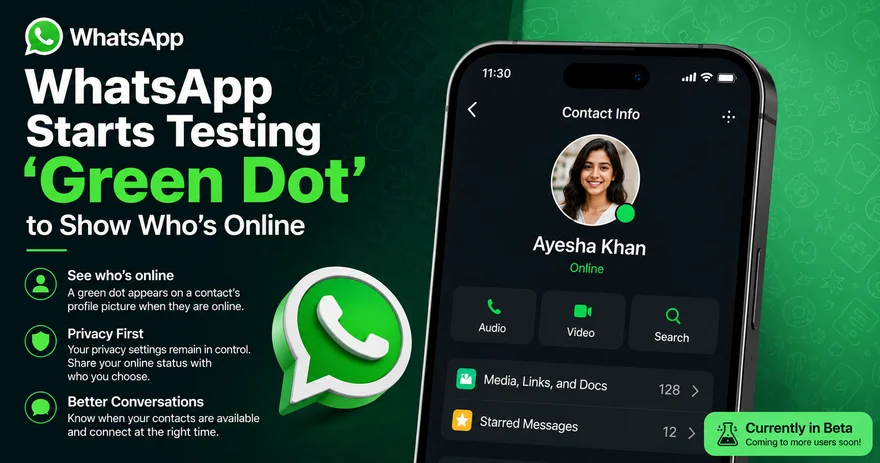
WhatsApp is testing a new Green Dot feature that makes it easier for users to see when a contact is online. The feature adds a small green indicator on a contact’s profile photo when that person is currently active on WhatsApp. While this may sound like a small design update, it could change the way users interact on the platform by making online availability more visible and easier to understand at a glance.
According to WABetaInfo, the feature first started appearing for some WhatsApp beta users on Android with version 2.26.24.5. It was later spotted in the iOS beta version 26.26.10.72, showing that WhatsApp is testing the same online indicator across both major mobile platforms.
What Is WhatsApp’s Green Dot Feature?
The Green Dot is a small circular indicator that appears on a contact’s profile picture when they are online. Instead of checking for the traditional “online” text under a contact’s name, users may now be able to identify online contacts visually.
At the moment, the green dot appears in the chat info screen, not directly in the main chat list or inside the conversation window. This means users need to open a contact’s chat details to see whether the person is currently active. WABetaInfo reports that the dot disappears as soon as the contact is no longer active on the app.
Why WhatsApp Is Testing This Feature
WhatsApp has always shown online activity in a more subtle way compared to many other social and messaging platforms. Apps like Messenger, Instagram, and other communication tools often use a green dot to show real-time availability. By testing this feature, WhatsApp appears to be making online presence more visual and user-friendly.
The purpose is simple: users can quickly know whether someone is available before sending a message. This could be especially useful for people who rely on WhatsApp for work, family coordination, customer support, or urgent communication.
How the Green Dot Works
When a contact is actively using WhatsApp, a small green dot appears on their profile photo in the chat info screen. If the contact closes WhatsApp or is no longer active, the dot disappears. This makes the indicator a real-time signal of availability.
However, the feature does not appear for every contact. WhatsApp is reportedly respecting the existing privacy settings for “last seen” and “online” status. If someone has hidden their online status, the green dot should not appear for them.
Privacy Still Matters
The biggest question around this feature is privacy. Many WhatsApp users prefer to keep their online activity private, especially because WhatsApp is used for both personal and professional conversations.
WhatsApp already allows users to control who can see their “last seen” and “online” information through privacy settings. Users can choose visibility options such as everyone, contacts, selected contacts, or nobody, depending on the platform and setting availability. WhatsApp also notes that if users do not share their own last seen or online status, they may not be able to see other users’ last seen or online status either.
This means the Green Dot feature is not expected to override privacy controls. Instead, it appears to be a redesigned way of showing information that WhatsApp already makes available when a user permits it.
A Small Change With a Big User Experience Impact
Although the Green Dot is a minor visual addition, it can make WhatsApp feel more immediate and interactive. Users will no longer need to look for small text labels or open a chat just to check availability. The green dot offers a faster, cleaner signal.
For businesses, this could be useful in customer conversations. A visible online indicator may help users know when a representative, client, or team member is active. For personal chats, it may help people decide whether to send a quick message, make a call, or wait for a better time.
However, it may also create pressure for some users. When online activity becomes more visible, people may feel expected to reply faster. This is why privacy controls remain important.
Is the Green Dot Available to Everyone?
No, not yet. The feature is currently being tested with selected beta users. On Android, it has been linked to WhatsApp beta version 2.26.24.5, while on iOS it has been spotted in beta version 26.26.10.72. WABetaInfo reports that the rollout is gradual, meaning not all beta users will see it immediately. WhatsApp has not officially confirmed when the feature will be released to all users in the stable version.
How to Control Your Online Visibility on WhatsApp
Users who do not want others to see when they are online can review their privacy settings. The general path is:
Open WhatsApp, go to Settings, then Privacy, and select Last Seen and Online. From there, users can choose who can see their online status.
This is especially important as WhatsApp continues to test features that make online presence more noticeable. Checking privacy settings ensures users stay in control of how visible they are to others.
Does the Green Dot Affect Message Privacy?
The Green Dot does not mean that WhatsApp messages become less private. It only relates to online status visibility. WhatsApp continues to describe the app as a private messaging platform where personal messages and calls are protected with end-to-end encryption.
However, online status is a form of presence information, not message content. Users who are privacy-conscious should still review who can see their activity status, profile photo, about section, and last seen information.
Final Thoughts
WhatsApp’s Green Dot feature is a simple but meaningful update. It brings a familiar social media-style indicator to the messaging app, helping users quickly identify when someone is online. For many people, this will make communication faster and more convenient.
At the same time, WhatsApp must balance convenience with privacy. Since the feature appears to respect existing online status settings, users should still have control over whether their activity is visible.
For now, the Green Dot remains a beta feature, but its arrival on both Android and iOS suggests that WhatsApp may be preparing for a wider rollout in the future. If released publicly, it could become one of those small interface changes that quickly feels normal in everyday messaging.